If you have ever wondered why a competitor down the street keeps showing up at the top of Google search results while your restaurant barely appears at all, the answer is almost certainly restaurant SEO. Not the paid-ad kind. Not some complex technical campaign. The foundational kind, the kind that starts with making sure Google can find, read, and trust the basic information about your restaurant.
This guide explains what restaurant SEO actually means, why it matters for small and independent restaurants, and where to focus first. No jargon, no overwhelming to-do lists. Just a clear picture of how Google finds local restaurants and what you can do to make sure yours is one of them.
What Restaurant SEO Actually Means
SEO stands for search engine optimization. That sounds technical, but for a local restaurant, it really means one thing: making sure Google has the information it needs to recommend your business to people who are nearby and hungry.
When someone searches "seafood restaurant near me" or "best breakfast spots in [your city]," Google is working through a process in the background. It is looking at all the restaurants it knows about in that area, deciding which ones have complete and reliable information, and ranking them based on how well they match what the person is searching for. Restaurant SEO is the work you do to make sure your restaurant comes out well in that process.
For a small, independent restaurant, this does not require a marketing degree or a big budget. It requires getting the right information in the right places and making sure it is accurate. That is where most independent restaurants have room to improve.
Why Local SEO for Restaurants Is Different from General SEO
You may have heard about SEO in the context of blogging, e-commerce, or national brands competing for clicks from all over the country. Local SEO for restaurants is a narrower and more practical version of that.
You are not trying to outrank every restaurant in the country for a generic keyword. You are trying to show up when someone in your neighborhood or your city searches for what you serve. That makes the task considerably more manageable.
Local SEO for restaurants is driven by a few specific factors: whether you have a real, complete website; whether your Google Business Profile is claimed and up to date; whether your name, address, and phone number are consistent across the internet; and whether Google can read and understand the content on your site. Most of those are within your control right now, without spending money on advertising.
The Starting Point: Your Google Business Profile
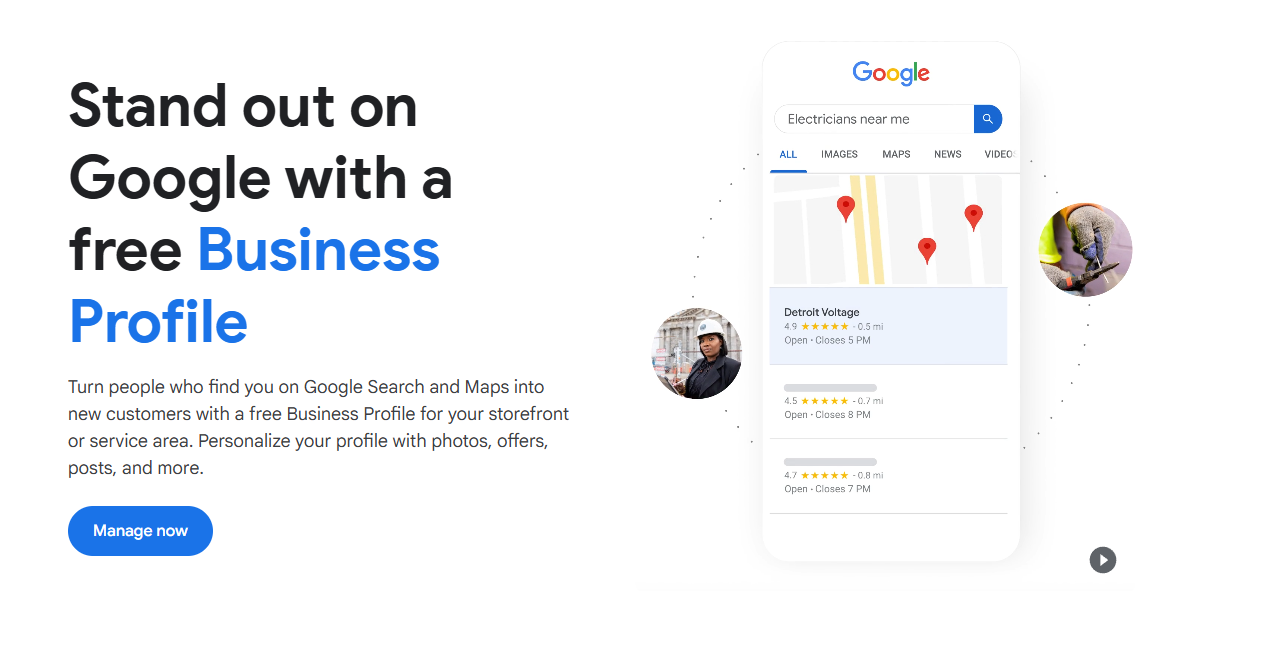
If you have not already claimed your Google Business Profile, that is the first step. This is the box that appears on the right side of Google search results when someone looks up your restaurant by name, and it is what powers your restaurant's appearance on Google Maps.
Your Business Profile should include your full business name, your correct address, your current phone number, your hours including any special holiday hours, your cuisine type, a link to your website, and at least a few photos of your food and space.
Once your profile is claimed and filled out, keep it current. When your hours change, update your profile. When you add new dishes, add new photos. When your phone number changes, fix it immediately. Outdated information on your Business Profile is one of the fastest ways to lose a customer who was ready to walk in the door.
One important nuance: your Business Profile and your website work together, not as substitutes for each other. Your profile tells Google you exist. Your website tells Google what you are, what you serve, and why you are worth recommending. You need both.
How to Rank a Restaurant on Google: The Role of Your Website
Your website is where the most important SEO work happens. Google reads your website to learn about your restaurant in detail. And the way it reads is important to understand.
Google is not browsing your site the way a person does. It is scanning for specific, organized pieces of information: your restaurant's name, your address broken down correctly, your cuisine type, your hours in a format it can process, your menu items, and your price range. When those details are present and clearly structured, Google can confidently match your restaurant to the right searches. When they are missing or scattered, Google has less to work with, and your visibility suffers.
This is why a restaurant that has a real, complete website tends to outperform one that only has a Facebook page, even if the Facebook page has more followers. Google can read a well-built website in a way it simply cannot replicate with a social media profile.
What Your Website Needs to Help Google
The key pieces are not complicated. Your website needs your full menu written as readable text on the page, not just a PDF or an image file. It needs your current hours. It needs your address written out clearly. It needs food photos. And it needs your contact information.
None of that is technically advanced. The challenge for many restaurant owners is that their current website, if they have one, is missing some of it. Pages that have not been updated in years. A menu that lives only in a downloadable file. Hours that stopped being accurate after a pandemic-era change. These gaps are what local SEO for restaurants is largely about closing.
What Else Affects How Your Restaurant Ranks on Google
Consistency Across the Web
Google checks more than just your website. It looks at your Yelp listing, your Facebook page, your Google Business Profile, and any other place your restaurant appears online. If your name, address, and phone number are different across those sources, Google becomes less confident in the accuracy of your information. That uncertainty can quietly work against your rankings.
Keep those details identical everywhere. The same business name, the same address format, the same phone number. This kind of consistency is one of the easiest local SEO for restaurants improvements you can make, and it costs nothing.
Reviews
Reviews matter for local restaurant SEO, both the number you have and how you respond to them. Google treats a steady stream of recent reviews as a signal that your restaurant is active and relevant. You do not need to manufacture reviews or pressure customers. You can simply make it easy to leave one by sharing your Google review link in follow-up messages, on receipts, or on table cards.
When you receive reviews, respond to them. Thank customers who leave positive feedback. Address negative reviews professionally and without defensiveness. This signals to both Google and future customers that you are an engaged, attentive business owner.
Mobile Usability
Most restaurant searches happen on phones. If your website is hard to navigate on a small screen, customers leave quickly, and Google notices that pattern. A site that loads fast, displays correctly on any device, and makes it easy to find your menu and phone number without zooming or scrolling excessively is a basic requirement for competitive restaurant SEO today.
How MenuHost Supports Restaurant SEO Without the Technical Complexity
One of the biggest barriers to restaurant SEO for independent owners is that getting a website to perform well technically requires knowledge most restaurant owners do not have and do not have time to acquire. MenuHost was built to remove that barrier.
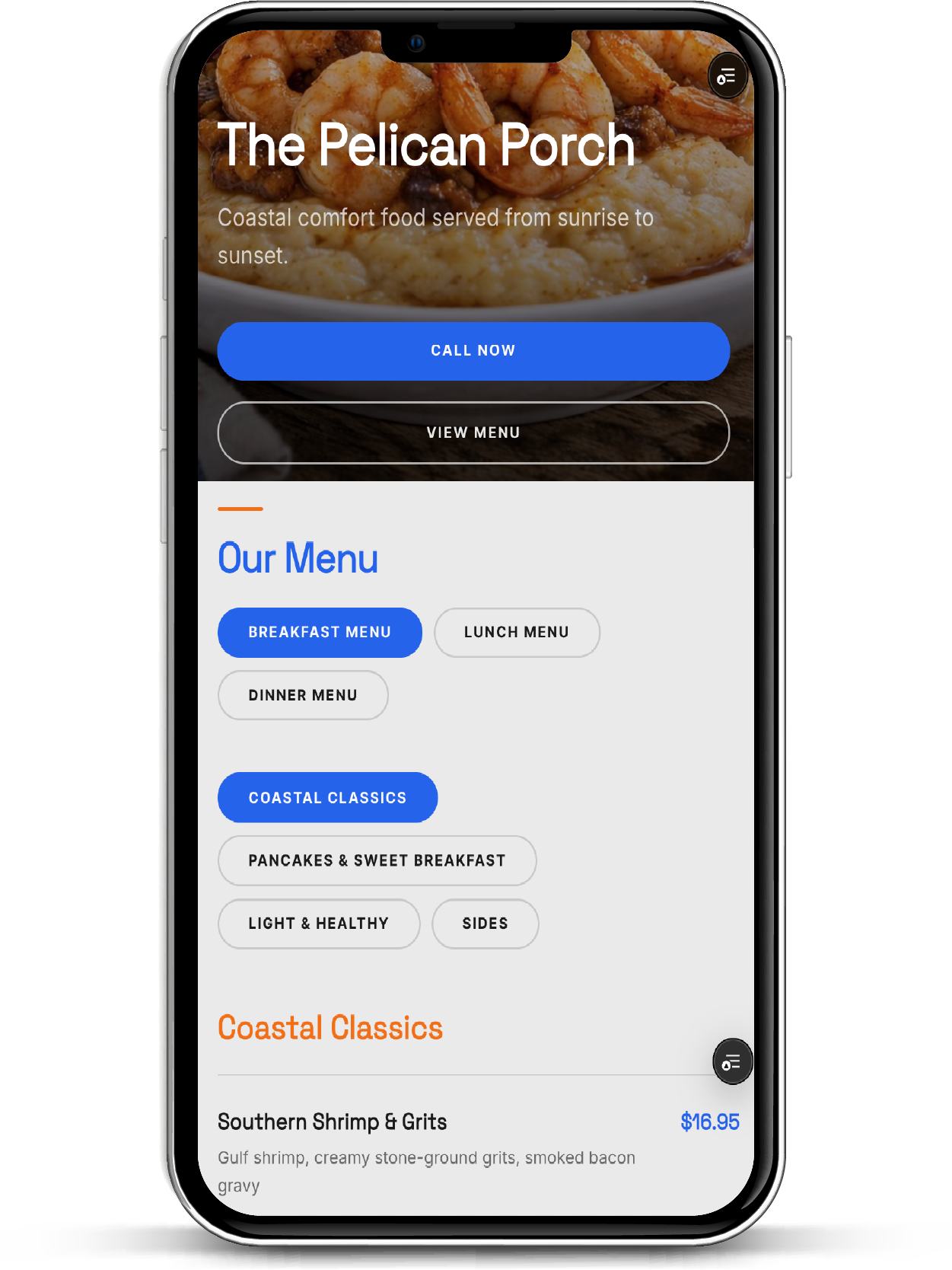
When you build a site on MenuHost, the foundational SEO setup restaurant owners would otherwise need to research, configure, or hire someone to implement is handled automatically from the moment you publish. Your business details, cuisine type, hours, menu items, price range, and address are organized in a format Google is built to read and understand. Your food photos are submitted to Google Images. Your site gets its own sitemap you can submit directly to Google Search Console.
The editor itself is written in plain English, labeled the way a restaurant owner thinks, with no jargon and no blank pages to stare at. You fill in your information. MenuHost handles the structure that makes it readable to Google.
This is not a replacement for every kind of SEO work in every competitive market. But for independent restaurants that need to get their foundational visibility right, it covers the ground that matters most, without requiring a technical background or a marketing team.
Where to Start with Restaurant SEO Today
The most useful thing to do right now is not to hire an agency or run paid ads. It is to make sure the basics are in place.
Claim your Google Business Profile if you have not. Fill it out completely and keep it current. Build or update your website so your menu, hours, address, and photos are all present, accurate, and easy to find on a phone. Make sure your contact information is consistent across every platform where your restaurant appears. Ask your satisfied customers to leave a Google review.
That is the foundation of restaurant SEO for a local, independent restaurant. It is not glamorous, and it does not happen overnight. But it is the work that keeps paying off long after you do it, and most of your competitors have not done all of it yet.

Restaurant SEO Does Not Have to Be Complicated
The goal of restaurant SEO is simple: make it easy for Google to find you, understand you, and recommend you to the people nearby who are looking for exactly what you serve. The steps to get there are straightforward for any restaurant owner willing to spend a few hours getting the right information in the right places.
Start with what you can control today. A complete, accurate Google Business Profile. A real website with your menu, hours, and location. Consistent information everywhere your restaurant appears online. Those three things alone put you ahead of a significant portion of local restaurants that are still relying on Facebook alone or running outdated sites with missing menus.
Your restaurant is worth finding. Restaurant SEO is how you make sure people actually do.
Ready to get your restaurant online the simple way?
Get Your Restaurant Online at MenuHost.co and have a complete, Google-ready website live in one sitting, no SEO knowledge or technical skills required.